
The office calendar says closed. The phone greeting still says someone will answer shortly. A caller leaves a message, but the person responsible for that mailbox is also away.
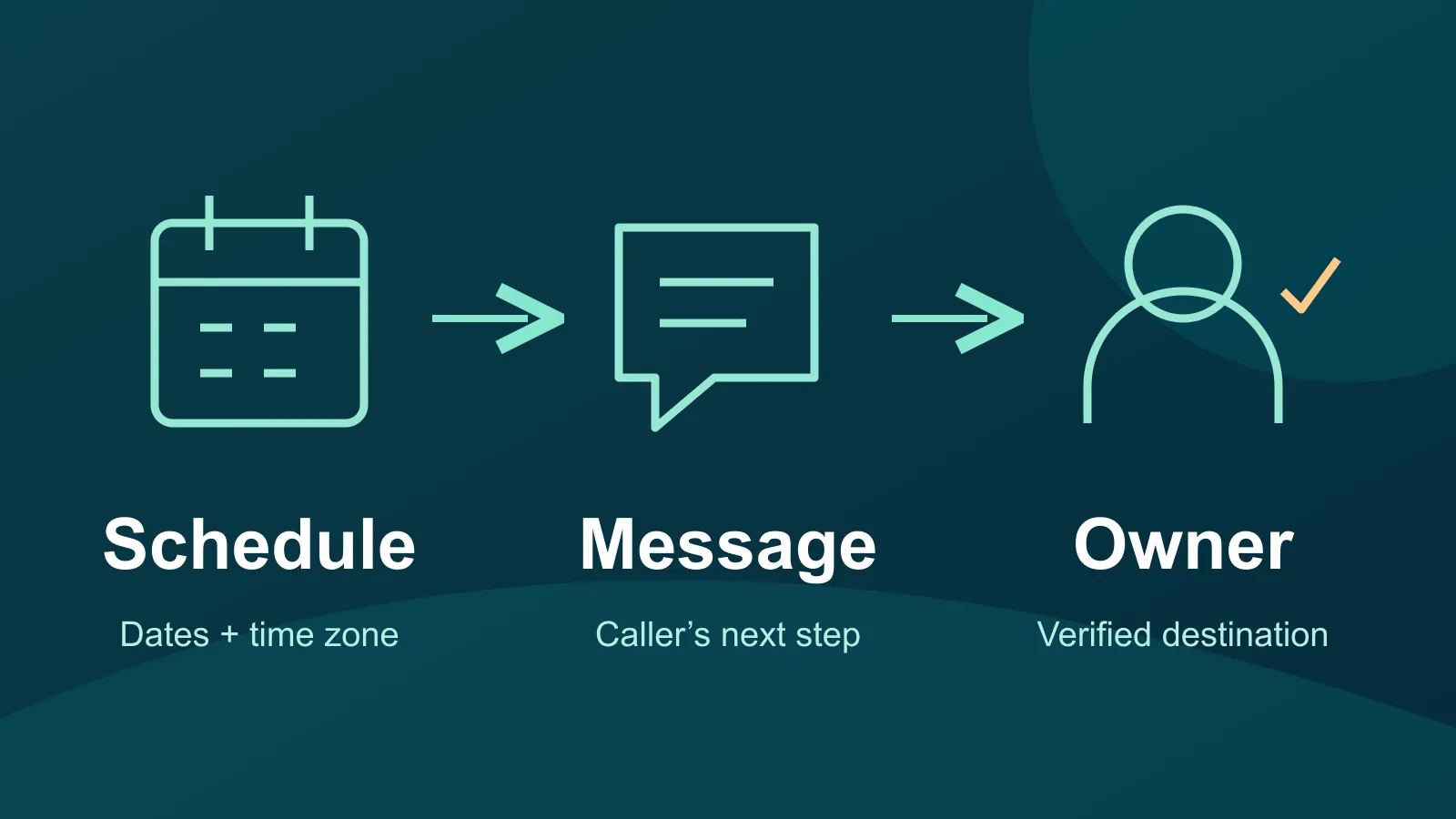
A holiday phone plan needs three things to agree: when the closure applies, what callers hear, and who owns the next action. Review the full route, place a controlled test call, and confirm how normal service resumes. A new greeting alone does not verify the destination.
Start with the caller's next step
In an illustrative example, a small accounting office closes for a staff day. Routine callers should hear the reopening date and reach a mailbox the designated cover person can check. A specific client-support route may need different handling, but only if the business has actually arranged that coverage.
Write down the main published number, any direct numbers that need separate handling, the intended destination and the person accepting responsibility. Decide whether callers can leave a message, reach an approved alternate contact or receive information and disconnect. Confirm what the selected phone service supports before choosing a route.
Do not promise immediate callbacks, round-the-clock staffing or clinical assistance unless the responsible team has agreed to provide it. A dental office should have its clinical owner approve any patient-facing instructions. Keep this administrative test separate from emergency calling; do not call emergency services as a test.
Check the schedule as carefully as the recording
Confirm the time zone and the exact start and end of the closure, including partial days. Check whether the schedule repeats and whether an old exception remains active. Write the reopening date in plain language so the manager and phone administrator can compare the same intention.
Phone systems implement these controls differently. As one product-specific example, Microsoft's Teams auto attendant documentation separates business-hours, after-hours and holiday call flows and uses a configured time zone. Its holiday setup guide requires explicit start and end times. These are examples of controls to verify, not setup instructions for every VFIX or other provider account.
Ask your administrator to show the effective route and any precedence rules for your own platform. A closure in an employee's personal calendar is not evidence that the main number's answering rules were updated.
Make the greeting match the actual destination
Keep the message short: identify the business, explain the closure, say when normal handling resumes and give the supported next step. Read it aloud before recording or saving it. Check names, dates, pronunciation and any menu options.
If the message says “leave a voicemail,” the route must actually reach the intended mailbox. If it offers an alternate number or menu choice, the destination owner should accept the handoff and confirm availability. Avoid sending callers to someone's personal number without an approved business arrangement.
Use a generic callback request for test messages. Do not put patient details, payment information or confidential client matters into a test recording or shared test log.
Run a small end-to-end rehearsal
Have the authorized phone administrator arrange a safe way to test the closure route without unexpectedly diverting live business calls. Record the current settings and an agreed return path before any temporary test configuration. This article does not recommend changing the production clock or applying an unreviewed schedule.
- Call the actual published number from an external line. Listen to the whole greeting and check that the route you intended is the one you reached.
- Try each offered choice. Confirm the destination and what happens when nobody answers. Include a no-selection test if the platform supports a menu.
- Leave a harmless test message when voicemail is part of the plan. Have the designated person retrieve it through the approved account or tool. A notification alone is not the same as the owner being able to hear and handle the message.
- Record the result. Capture time, time zone, number called, expected destination, observed outcome and the person who checked it. Keep unresolved failures open.
- Verify the return to normal. Confirm the normal greeting and route, the closure end setting and who will check the reopening. Remove any temporary test change through the authorized process.
Leave a handoff that survives the holiday
The completed plan should name the schedule owner, message owner and backup contact. Agree how often messages will be reviewed and how the next working team receives outstanding items. Set a review reminder through the business's normal process; a saved configuration is not proof someone is watching the mailbox.
This is planned closure handling. For a connectivity failure, see where business calls should go when the internet is down. Keep those two situations distinct so an outage does not inherit an unsuitable holiday message.
VFIX describes call menus, queues, forwarding and answering rules around opening hours. Discuss your business call flow to confirm the options, service scope and people needed for a tested closure plan. No particular platform feature or staffing arrangement is assumed here.
Scope: planned office closures and administrative call-flow testing. Primary sources checked October 29, 2026. Platform features, licensing, routing rules and coverage must be confirmed for the actual account.